



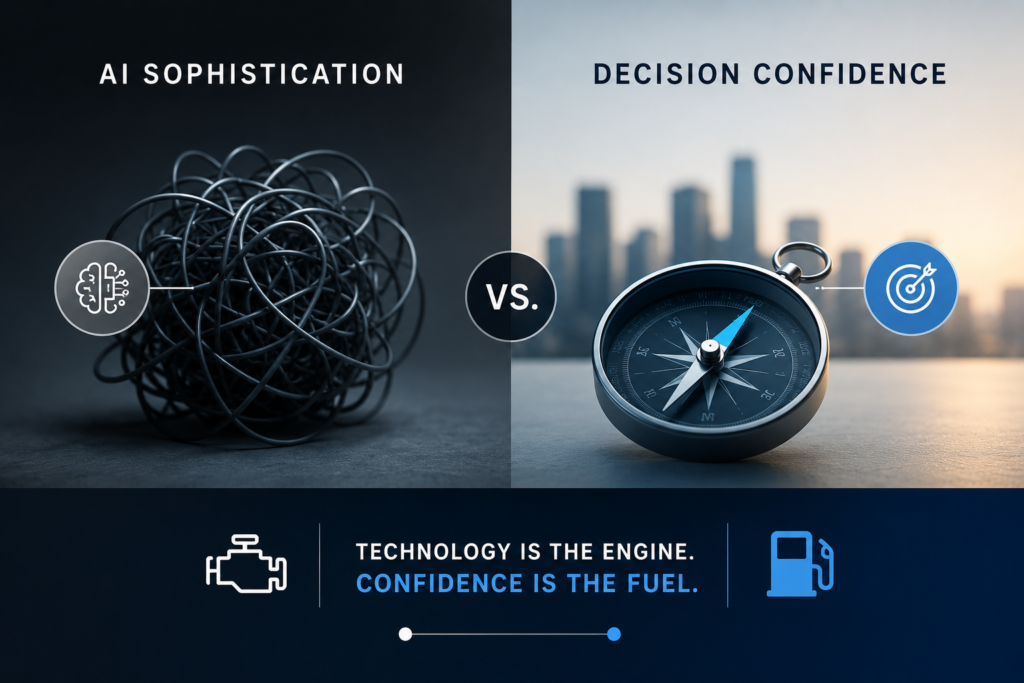
Organizations are chasing AI sophistication while ignoring model reliability, creating more noise than actionable decision intelligence.
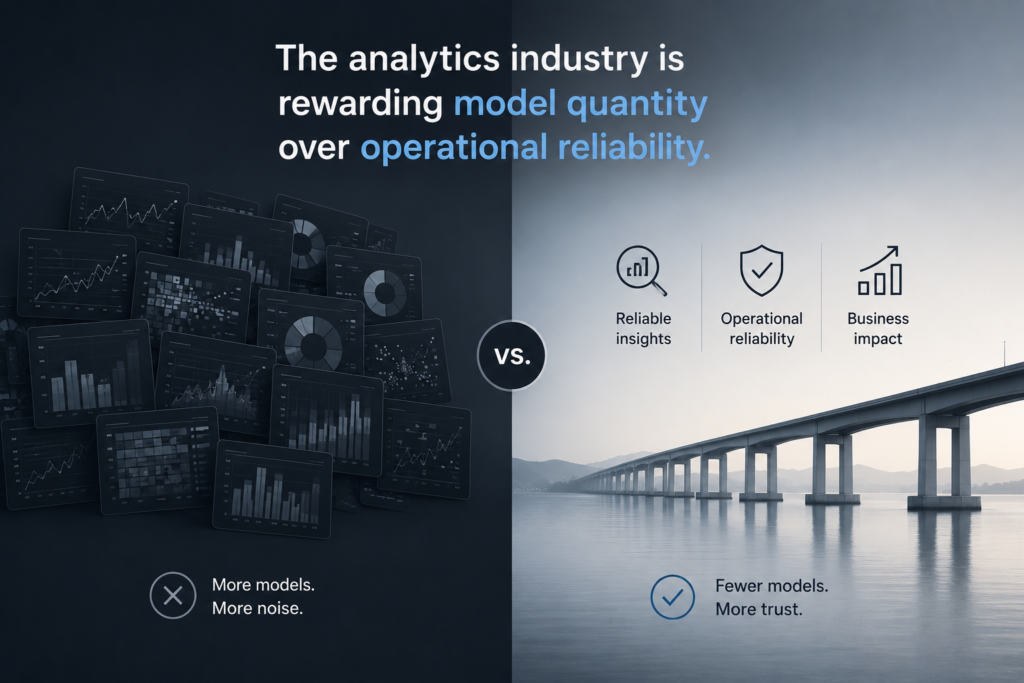
The analytics industry has quietly developed an unhealthy obsession – building more models instead of building better ones.
Every enterprise conversation today seems to revolve around expanding the AI stack. Organizations want more experimentation, more AI capabilities, more predictive layers, more signals, more automation, more sophistication. Fraud analytics teams are discussing voice analytics, behavioral biometrics, graph intelligence, GenAI copilots, network detection and advanced anomaly detection frameworks — often in the same conversation.
On the surface, this looks like progress.
But beneath the sophistication lies a much more uncomfortable reality: many foundational analytics models are still unreliable.
Recently, I interacted with someone in the health insurance domain where the current fraud detection model was operating at nearly 50% accuracy. Yet instead of strengthening the core detection engine, the strategic conversation had already shifted toward adding more layers of intelligence on top of it.
That is becoming increasingly common across industries.
When foundational models struggle with reliability, organizations often respond not by improving the fundamentals, but by introducing additional complexity. New data sources get added. Experimental models get deployed. AI layers multiply. Dashboards expand. Alerting systems become more sophisticated.
But sophistication without reliability does not create intelligence.
It creates noise.
The Hidden Problem in Enterprise Analytics
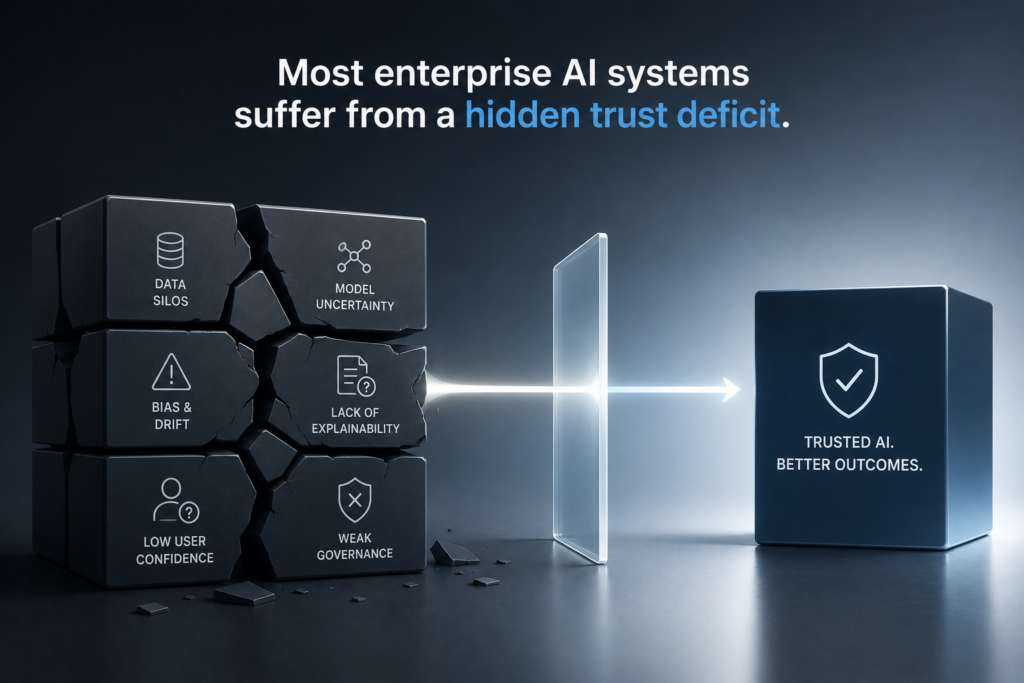
Most organizations will never openly admit this, but a large percentage of enterprise analytics systems operate with weak decision confidence.
The issue is not the absence of AI investment. In fact, the opposite is true. Enterprises are investing aggressively in analytics modernization. The issue is that the operational reliability of many models remains fragile.
Common symptoms include:
- High false positives
- Inconsistent predictions
- Poor feature stability
- Weak training data quality
- Concept drift
- Limited feedback loops
- Low business trust
- Alert fatigue among operational teams
In fraud analytics specifically, this becomes extremely dangerous.
A fraud detection model is not merely a technical artifact. It directly influences investigations, claim approvals, payment holds, escalation workflows, customer experience and operational cost structures. Weak predictions have real-world consequences.
And yet many organizations continue to pursue additional layers of sophistication before stabilizing the foundation itself.
This creates what I call Model Inflation.
The assumption becomes: “If one weak model is not delivering enough value, perhaps five more models will.”
Unfortunately, that rarely solves the core problem.
Complexity Is Not Maturity
Somewhere along the way, the analytics industry started equating technical complexity with analytical maturity.
The number of deployed models became a badge of innovation.
The language itself shifted:
- multi-model architecture
- AI orchestration
- ensemble intelligence
- multimodal analytics
- cognitive fraud detection
- autonomous risk systems
The terminology became more sophisticated than the operational outcomes.
In reality, many organizations are building layers of intelligence on top of unstable prediction systems.
This is especially visible in fraud analytics environments.
A typical enterprise fraud stack today may include:
- rules engines
- anomaly detection
- ML risk scoring
- behavioral analytics
- network analytics
- device fingerprinting
- NLP-based claim analysis
- voice analytics
- GenAI summarization layers
Individually, many of these technologies are powerful.
But there is a fundamental question organizations are avoiding:
If the core risk scoring itself lacks reliability, are we strengthening intelligence — or simply industrializing uncertainty?
Because downstream sophistication cannot fully compensate for upstream weakness.
If the base signal is noisy, additional analytical layers often amplify the noise rather than eliminate it.
The Operational Cost of Weak Models
One of the biggest misconceptions in analytics is that low model quality is merely a technical issue.
It is not.
Weak models create organizational friction.
Consider a fraud investigation team working with high false-positive rates. Every inaccurate alert consumes investigator bandwidth. Analysts begin spending more time clearing legitimate cases than identifying fraudulent ones.
Over time, several things start happening simultaneously:
- Investigators lose trust in the alerts
- Business teams bypass analytics recommendations
- Manual overrides increase
- Escalation fatigue sets in
- Operational responsiveness slows down
- Analytics adoption weakens
Eventually, the organization reaches a dangerous point where the analytics system technically exists, but operationally nobody fully trusts it.
This is one of the least discussed problems in enterprise AI.
The success of analytics is not determined by whether a model exists. It is determined by whether decision-makers confidently act on its outputs.
That distinction changes everything.
More AI Does Not Automatically Mean Better Decisions
The current AI wave is intensifying this problem.
Organizations are under immense pressure to appear AI-driven. Leadership teams want visible AI transformation initiatives. Vendors are aggressively positioning new capabilities. Consulting firms are selling AI-led modernization narratives. Internal analytics teams are incentivized to demonstrate innovation velocity.
As a result, many organizations are prioritizing visible sophistication over foundational reliability.
There is significantly more excitement around:
- deploying GenAI
- building copilots
- introducing conversational analytics
- integrating voice intelligence
- experimenting with autonomous agents
than there is around:
- improving precision
- reducing false positives
- strengthening calibration
- improving training data quality
- simplifying architectures
- building trust with operational teams
But operational value rarely comes from novelty alone.
In high-impact domains like fraud analytics, healthcare, banking, insurance and risk management, reliability creates more business value than experimentation.
A highly trusted model with stable precision can transform operational decision-making far more effectively than a collection of experimental models nobody fully understands.
That is the uncomfortable truth many organizations are beginning to face.
The Sophistication Trap
The danger with advanced analytics is that complexity can create the illusion of progress.
Large architectures look impressive in presentations. Multi-layered AI ecosystems sound futuristic. Long lists of capabilities create executive excitement.
But internally, the business may still be struggling with basic trust issues.
This creates what I call the Sophistication Trap: the belief that adding more intelligence layers will eventually compensate for weak fundamentals.
In practice, the opposite often happens.
As complexity increases:
- explainability declines
- governance becomes harder
- debugging slows down
- operational alignment weakens
- ownership becomes fragmented
- confidence erodes further
At some point, the analytics system becomes too complex for business teams to meaningfully trust.
And once trust disappears, adoption quietly collapses.
The organization may continue funding the platform, maintaining dashboards and expanding AI initiatives — but the actual decision influence of the system declines.
This is far more common than most enterprises realize.
The Real Metric That Matters: Decision Confidence
The future of analytics will not be defined by model count.
It will be defined by decision confidence.
That is the metric enterprises should start optimizing for.
Decision confidence answers a much more important question than technical sophistication:
“Can business teams reliably act on these outputs without hesitation?”
That requires far more than algorithmic experimentation.
It requires:
- stable data pipelines
- reliable features
- strong governance
- explainable outputs
- operational alignment
- continuous feedback loops
- measurable intervention outcomes
- investigator trust
In other words, analytics maturity is not merely a modeling problem. It is a systems trust problem.
The strongest analytics organizations understand this deeply.
They do not chase sophistication for optics.
They focus relentlessly on:
- signal quality
- intervention effectiveness
- operational usability
- decision speed
- measurable business impact
And interestingly, many of the best analytics systems are not the most complicated ones.
They are the most dependable ones.
What Mature Analytics Organizations Do Differently
High-maturity analytics teams think very differently from experimentation-heavy organizations.
Instead of asking: “How many models can we deploy?”
They ask: “Which outputs genuinely improve decisions?”
That shift changes priorities dramatically.
Mature teams spend more time on:
- improving data integrity
- refining feature engineering
- monitoring model drift
- reducing false positives
- calibrating thresholds
- strengthening feedback mechanisms
- improving explainability
- aligning with operational workflows
They understand a critical principle:
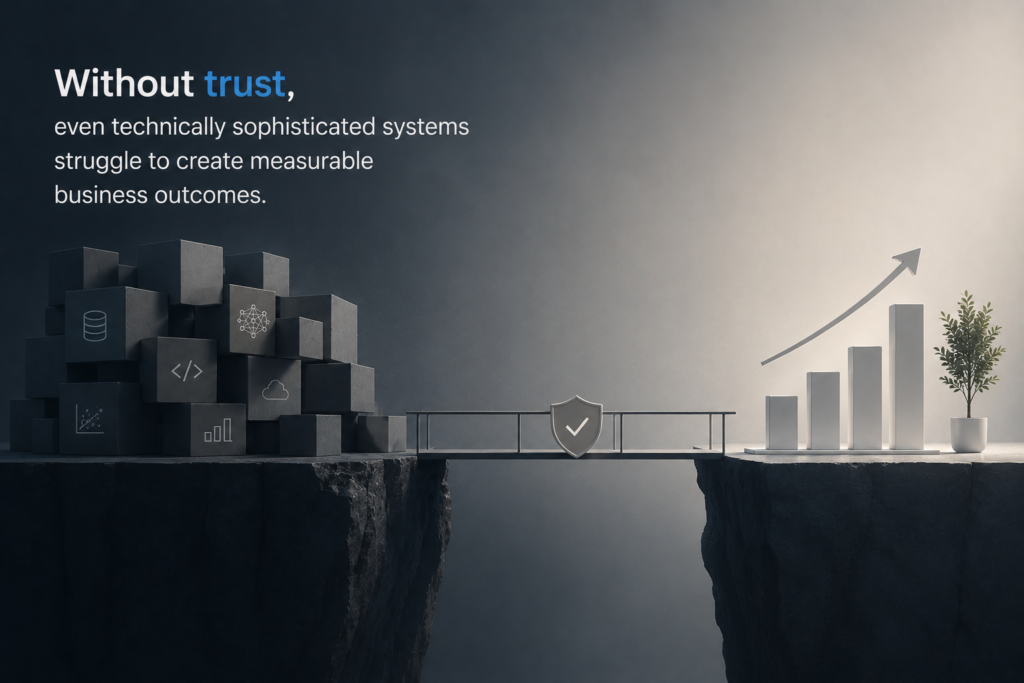
Analytics only creates value when operational teams trust the outputs enough to act consistently.
Without trust, even technically sophisticated systems struggle to create measurable business outcomes.
This is why some organizations with relatively simple fraud detection systems outperform organizations with highly advanced AI stacks.
Their models may not be flashy.
But their outputs are actionable.
And actionability is what creates business value.
The Industry Needs a Reset
The analytics industry is entering a phase where enterprises must rethink what “AI maturity” actually means.
For years, maturity was associated with:
- bigger platforms
- more dashboards
- larger data lakes
- more experimentation
- more AI integrations
But the next phase of enterprise analytics will likely be much more operationally grounded.
Organizations will increasingly realize that:
- ten weak models do not equal one trusted model
- complexity cannot replace reliability
- experimentation alone does not drive adoption
- sophisticated outputs are useless without decision confidence
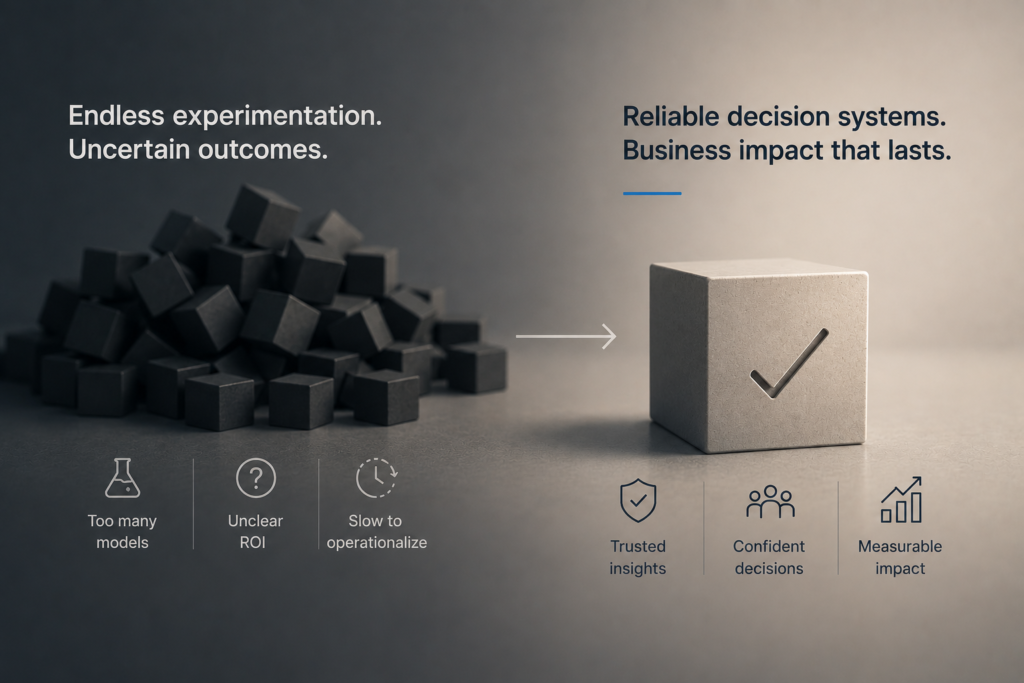
The winners in the next era of analytics will not necessarily be the organizations with the most AI.
They will be the organizations whose AI systems consistently improve decisions.
That is a very different benchmark.
And it requires a very different mindset.
Final Thought
Analytics teams often speak about intelligence as if it is purely a technological challenge.
It is not.
In enterprise environments, intelligence is ultimately measured by trust.
A model that business teams hesitate to act upon has limited value regardless of how sophisticated its architecture may be.
The future of analytics will not belong to organizations building endless layers of experimental models.
It will belong to organizations capable of building systems that are reliable, explainable, operationally trusted, and decision-oriented.
Because in the end, businesses do not run on model volume.
They run on confidence.
Leave a Reply