The Illusion of Better Decisions in the Age of Agentic Analytics
By
Dipak Singh
6 Min Reading
Agentic Analytics and Natural Query accelerate decisions, but without decision quality and data quality, they scale errors.
Enterprises are rapidly shifting toward Agentic Analytics and Natural Query–based Analytics.
The promise is simple and powerful. No more dashboards. No more manual exploration. Just ask and act.
“Why did sales drop?”
“What should we do next?”
With advances led by players like OpenAI, Microsoft and Google, analytics is becoming conversational, real-time and increasingly autonomous.
Systems are no longer stopping at insights. They are moving toward decision execution.
This is being positioned as the natural evolution of analytics.
But there is a deeper question that organizations should ask:
Are we improving decisions—or just automating them faster?
From Dashboards to Decisions – A Leap Too Fast
Traditional dashboards had limitations. They were static, often backward-looking and heavily underutilized.
But they served an important purpose: they forced visibility before action.
Users had to look, interpret, question, and then decide.
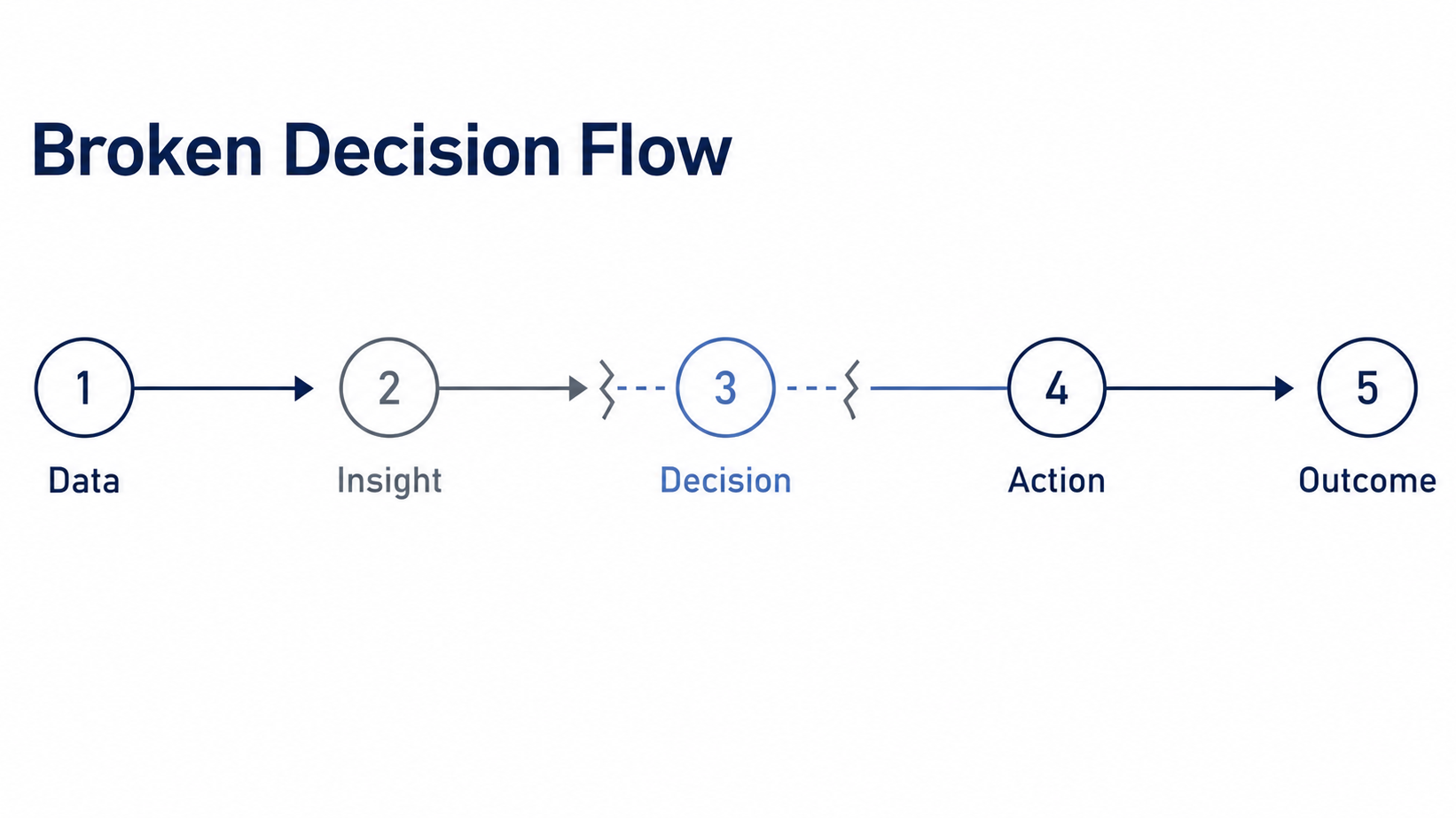
Agentic Analytics removes that friction. It compresses the cycle: Data → Insight → Decision → Action
In many cases, it skips steps altogether.
That efficiency is appealing. But it assumes something critical—that the decision layer was already strong.
In most organizations, it is not.
Natural Query Changes Access – Not Thinking
Natural Query–based Analytics is solving a real problem: accessibility.
Business users no longer need to navigate dashboards or depend on analysts. They can simply ask questions in plain language and get answers instantly.
But accessibility is not the same as analytical rigor.
When a user asks, “Why did margins drop?”, the system will produce an answer. It may even sound precise and well-articulated.
What it does not guarantee is whether:
The question was framed correctly
The right variables were considered
The underlying assumptions are valid
Natural language simplifies interaction. It does not improve decision quality.
And in analytics, the quality of output is directly tied to the quality of thinking behind the question.
Agentic Analytics: From Insight to Execution
The real shift is not querying. It is action.
Agentic systems are designed to not just recommend, but execute decisions – adjust pricing, trigger procurement, optimize inventory, flag risks.
This introduces a new layer of risk.
Because execution assumes clarity.
Clarity on:
What are we optimizing?
What trade-offs are acceptable?
What constraints must be respected?
In reality, most organizations operate with implicit decision logic. Objectives vary across stakeholders. Trade-offs are rarely codified. Context is often assumed, not defined.
When such ambiguity is automated, the result is not intelligence.
It is consistent misalignment at scale.
We Are Scaling Decisions Without Fixing Decision Quality
For years, decision-making in enterprises has been:
Experience-driven
Inconsistently applied
Weakly documented
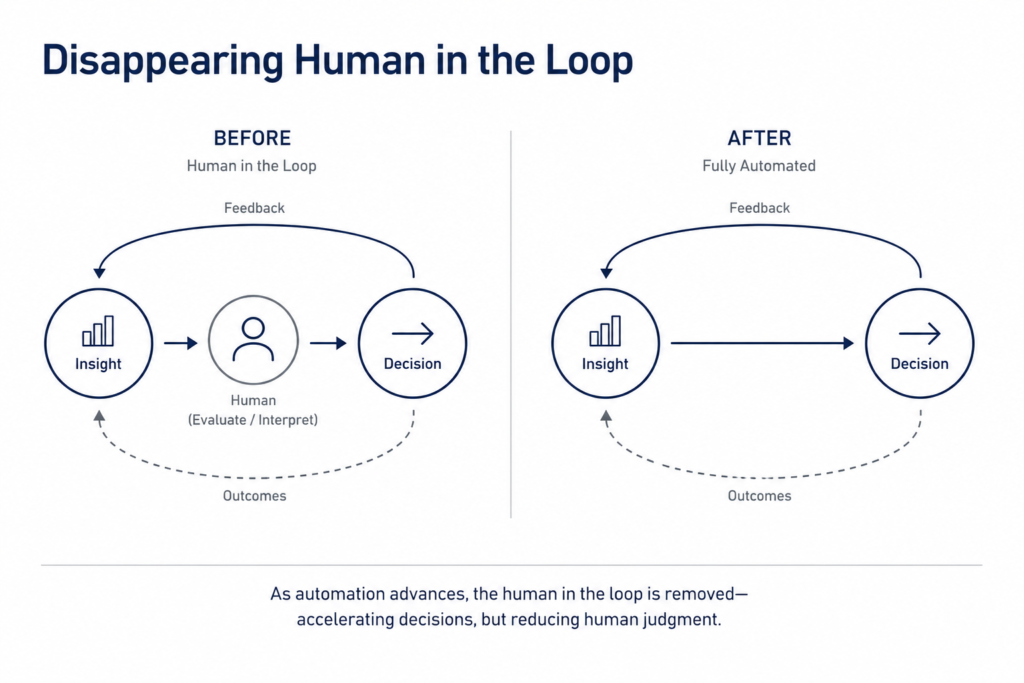
Humans acted as the balancing layer. They interpreted data, applied context and corrected inconsistencies.
Agentic Analytics removes that buffer.
What remains is the underlying system – often incomplete, loosely defined and dependent on fragmented data.
We are not transforming decisions. We are scaling whatever exists – good or bad.
The Data Problem Has Not Disappeared
There is another gap that is being quietly ignored: data quality.
Despite investments in data infrastructure, most enterprises still struggle with:
Inconsistent metric definitions
Delayed or incomplete data
Misaligned master data across systems
In a dashboard-driven world, these issues were visible. Users could question anomalies and reconcile differences.
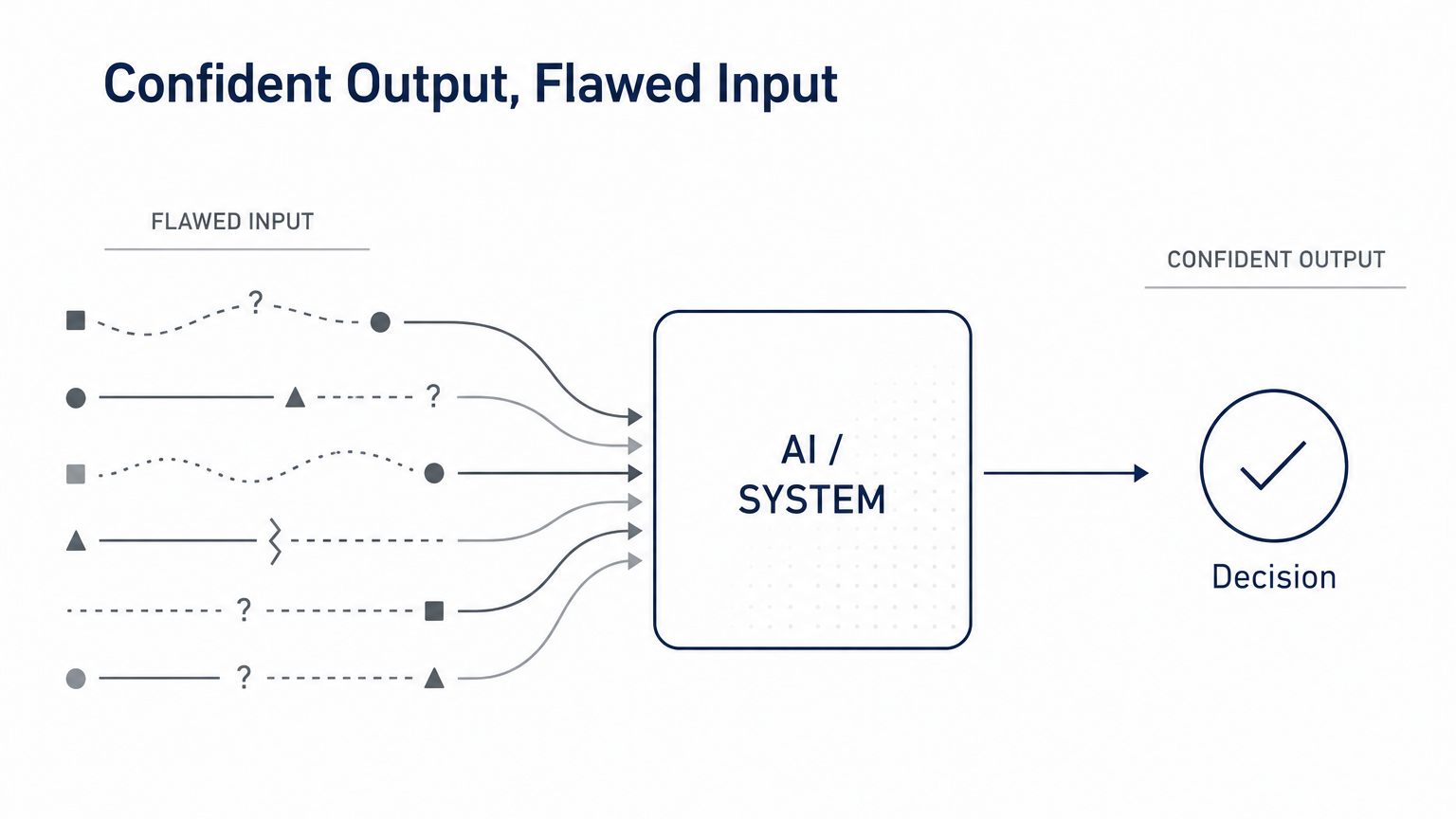
In a Natural Query environment, responses are packaged and presented as answers.
In an Agentic system, those answers are converted into actions.
This changes the impact of bad data.
Earlier, bad data created confusion. Now, it creates automated mistakes.
If the underlying data is unreliable, no interface – no matter how advanced – can fix that.
The Illusion of Simplicity
One of the biggest advantages of Natural Query–based Analytics is simplicity.
No training. No navigation. Just conversation.
But that simplicity at the interface level often masks complexity at the decision level.
Business decisions are rarely straightforward. They involve competing priorities, contextual judgment and scenario evaluation.
When everything is reduced to a question-and-answer format, there is a risk that decision-making itself becomes oversimplified.
The system may give an answer. But it may not reveal:
What assumptions were made
What data was excluded
What trade-offs were considered
Without that visibility, users are not making decisions. They are accepting outputs.
What’s Missing: Decision Design
Before organizations move toward Agentic Analytics, they need to focus on something far more fundamental: decision design.
A well-designed decision is not just an outcome. It is a structured system.
It requires clarity on objectives, inputs, rules and exceptions. It needs to define when automation is appropriate and when human intervention is necessary.
Very few organizations have formalized this.
Instead, they are expecting AI systems to infer structure from environments that were never structured in the first place.
That is not transformation. That is outsourcing ambiguity to machines.
The Accountability Gap
As decisions become automated, another issue begins to surface – ownership.
In traditional setups, decisions had visible owners. Someone reviewed the data and took responsibility.
In Agentic systems:
Decisions are system-driven
Actions are automated
Outcomes are diffused
This raises critical questions.
Who is accountable for a bad decision?
Who validates the logic?
Who intervenes when things go wrong?
Without clear governance, organizations risk creating systems where decisions happen, but ownership disappears.
A More Grounded Path Forward
Agentic Analytics and Natural Query based Analytics are not the problem. The problem is sequence.
A more grounded approach would look like this:
First, identify the critical business decisions that actually drive outcomes.
Then, define those decisions explicitly – objectives, inputs, constraints and trade-offs.
Next, ensure that the data feeding these decisions is reliable and decision-ready.
Introduce feedback loops so that decisions can be measured, challenged and improved.
Only after this foundation is in place should automation be introduced.
Automation should be the last layer – not the starting point.
Final Thought
The future of analytics is not about choosing between dashboards and natural language.
It is about choosing between:
Structured decision-making and automated ambiguity
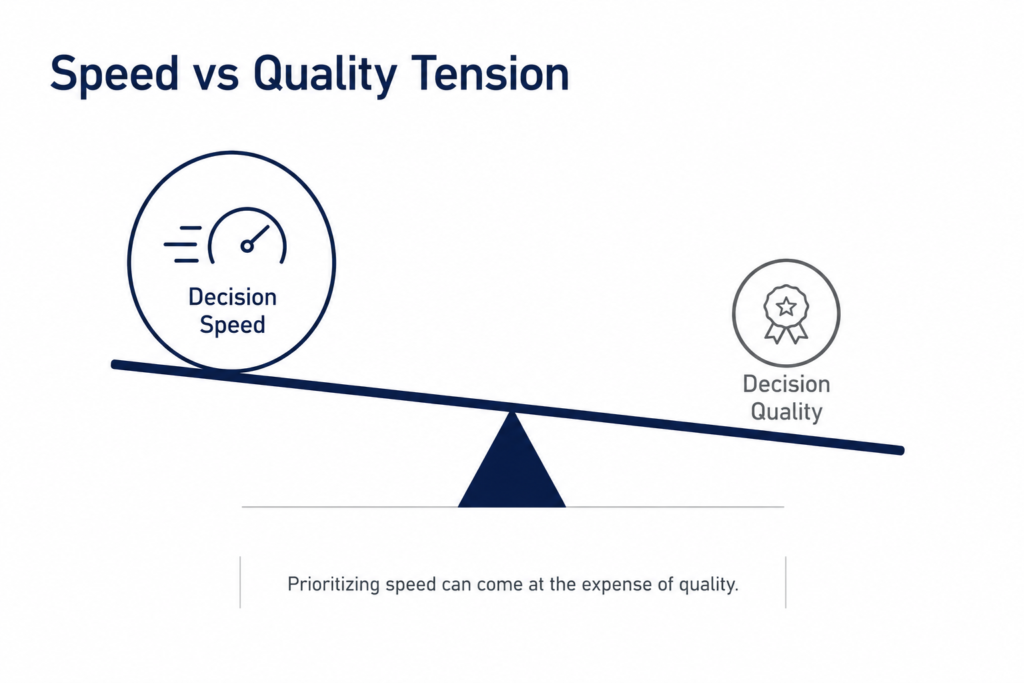
Agentic Analytics will make decisions faster. Natural Query will make access easier.
But neither will improve outcomes unless organizations fix what sits underneath:
Decision quality
Data quality
Because in the end:
If you automate a weak decision, you don’t gain efficiency – you scale the problem.
The real opportunity is not just to build systems that can act. It is to build systems that can decide well – before they act.




Leave a Reply